On the morning of June 24, the 2016 International Forum on Clinical Hydatid Diseases was held in Xining. Experts and scholars from France, Germany, and China in the hydatid disease field were brought together, which marked a new starting point for the basic research on and clinical treatment of hydatid disease in China.
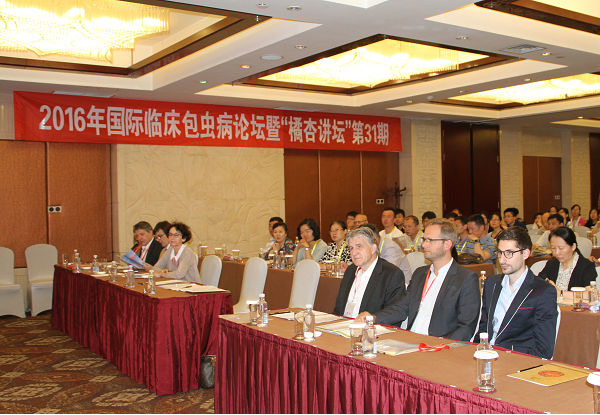
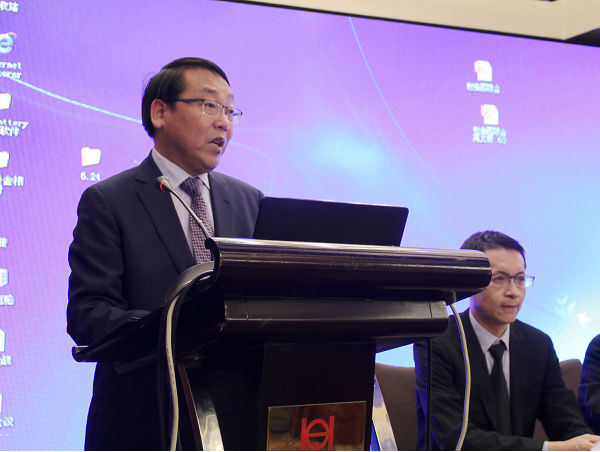
The forum, sponsored by Qinghai University and Qinghai Provincial Medical Association, undertaken by the Affiliated Hospital of Qinghai University and Qinghai Key Laboratory for Hydatidosis Research, and co-organized by the First Affiliated Hospital of Xinjiang Medical University, is an international academic forum on hydatid diseases. During the 4-day academic activities, more than 100 experts and scholars from France, Germany, Qinghai, Xinjiang, Shaanxi, etc. made in-depth discussions on the "Standardized Surgical Treatment Techniques for Hydatid Diseases" and "Recent Progress in the Study of Alveolar Hydatid Diseases," as well as on surgical training, clinical case analysis, and multi-center collaborative research.
Hydatid disease, a globally epidemic parasitic disease, has always been a focus of medical, clinical and disease control practitioners across the world. With the development of economy and technology, some new diagnosis and treatment technologies, such as three-dimensional imaging, ERCP, radiofrequency ablation, microwave ablation, and precision liver resection, will soon be applied to the clinical diagnosis and treatment of hydatid diseases. In the present world, however, there are many problems in the prevention and clinical treatment of hydatid disease that cannot be ignored, such as the difficulty of constraining the source for its spread and cutting off the transmission routes. Also given the various factors that affect certain areas, it is difficult to eliminate it from the source. In the field of clinical diagnosis and treatment, the diagnosis of hydatid disease at this stage mainly relies on B-mode ultrasound, CT, MRI, and PET-CT. There is a lag in imaging based diagnosis. The diagnostic kit has the disadvantages of low specificity and sensitivity in early diagnosis, so it is difficult to identify hydatid disease in the early stage. In addition, hydatid disease shows clinical symptoms late. The patients diagnosed with it are mostly in the middle or late stages, especially the alveolar echinococcosis, which can be compared to "carcinoma" for their similarity in growth. The clinical treatment is rendered difficult once the symptoms are shown. On the other hand, the pathogenic mechanism of hydatid disease has been unknown, which brings multiple uncertain factors to the early diagnosis and clinical treatment of hydatid disease.
The success of the forum will effectively promote academic exchanges at home and abroad, a common understanding in the field of prevention, diagnosis and treatment of hydatid disease, the advancement of its prevention and control, and the sharing of experience and achievements in the related research across the world.
Leaders such as Yu Hongxian, Secretary of the Party Committee of Qinghai University, Cui Sen, Secretary of the Party Committee of the Affiliated Hospital of Qinghai University, and Vice Director Fan Haining attended the forum.
: Party Committee Publicity Department: Wang Dong Affiliated Hospital: Gao Xiaowei